If you are shopping for a RIDGID charger and assume the 6-Port model must be faster than the Dual Port, stop right there. More ports does not automatically mean faster charging; in RIDGID’s case, the smaller Dual Port Simultaneous Charger is actually the speed king for getting batteries back into service quickly.
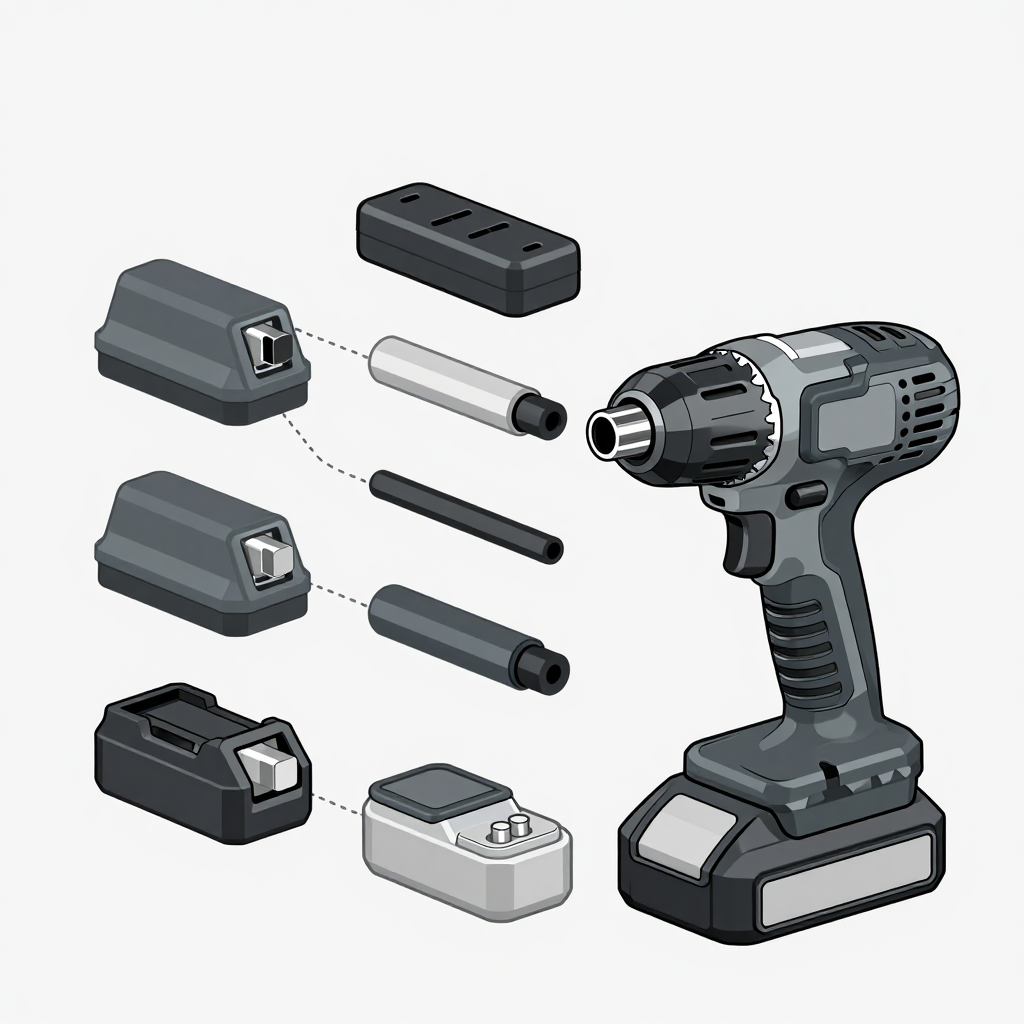
The reason is in the names. RIDGID’s 18V Dual Port Simultaneous Charger (AC86095) “Charges 2 RIDGID 18V Batteries Simultaneously,” while the 6-Port Sequential Charger handles up to six batteries by charging them one after another — sequentially. That means a full rack of batteries on the 6-Port still waits its turn, while the Dual Port delivers “2X Faster Charging Compared to Standard Charger” and can charge “two RIDGID 18V 2.0 Ah Lithium-ion Batteries in just 30 minutes.” For a single user or a small crew who wants batteries ready fast, two-at-once beats six-in-line.
The Dual Port charger is also built for real shop life. It “features keyhole slots, allowing the charger to be mounted on a wall,” and RIDGID states it is “100% compatible with all RIDGID 18V batteries.” It also carries the same service promise as the batteries: “Free Parts and Service for Life with Registration,” eligible for “the Industry’s Best Lifetime Service Agreement.” So the speed advantage does not come at the cost of compatibility or warranty coverage, provided you register the tool.
Where the 6-Port still wins
The 6-Port Sequential Charger is not obsolete; it just solves a different problem. If your workflow is to drop every dead battery on the charger at the end of a shift and let it run unattended overnight, six slots are convenient. You do not have to swap batteries, and by morning the queue is done. The trade-off is per-battery speed: each battery charges only while it is the active slot. Port count matters here, but it is a capacity and convenience advantage, not a speed one.
The MAX Output EXP battery angle
This guide also covers the next step up in RIDGID’s battery lineup: the MAX Output EXP line. The 18V 8.0 Ah MAX Output EXP Lithium-Ion Battery (AC840080) is rated at “8.0 Ah” and, according to RIDGID, is “100% compatible with all RIDGID 18V tools.” That compatibility claim is important because it means the EXP line drops into existing 18V tools without locking you into a new platform.
What sets EXP apart from the standard MAX Output line are two features RIDGID calls out on the AC840080 page. First, “MAX Output EXP batteries utilize advanced intelligent electronics to optimize performance by creating a communication system between both tool and battery.” That implies the battery and tool can talk to each other to manage draw and output, rather than the battery simply supplying power blindly. Second, the battery uses “ThermaGuard Technology which combines oversized heat sinks with advanced intelligent electronics to keep the battery running cooler, prevent overloading, and protect individual cell performance.”
It is worth keeping those claims scoped to the EXP line. RIDGID does not say the standard MAX Output 4.0Ah battery shares the same communication system or ThermaGuard hardware, so this guide treats them as EXP-specific benefits. The EXP battery is also “backed by the Industry’s Best Lifetime Service Agreement, simply register within 90 days of purchase for FREE Parts, Free Service, For LIFE.” Same registration rule, same lifetime coverage hook.
Practical takeaway
Choose the charger based on what you actually do, not the biggest number on the box. If the priority is speed for a couple of batteries — get back to work fast — the Dual Port Simultaneous Charger’s true two-at-once charging (30 minutes per 2.0Ah battery) is the better pick. If the priority is topping off many batteries overnight or over a shift without needing to babysit the charger, the 6-Port Sequential Charger’s higher port count matters more, even though it only charges one at a time.
On the battery side: the MAX Output EXP’s ThermaGuard heat management and tool-battery communication system are worth the upgrade for anyone running batteries hard in hot conditions or on high-draw tools; if that’s not the use case, the standard MAX Output line (covered on this site’s other RIDGID guide) is the simpler choice.
How this was checked
Facts on this page are drawn from RIDGID’s own 18V 8.0 Ah MAX Output EXP Lithium-Ion Battery (AC840080) and 18V Dual Port Simultaneous Charger (AC86095) product pages, both on powertools.ridgid.com (www.ridgid.com returns HTTP 403 to automated fetches).
Sources checked: 2026-08-11. A new review date will only be set after the linked pages are re-checked.